
U.S.–Israel–Iran War?
How to End the War with Open Democracy
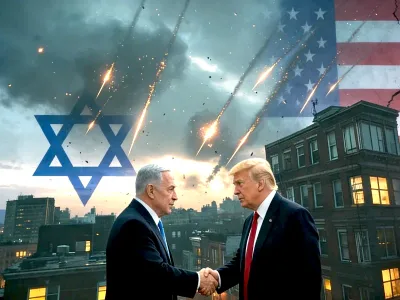
Never-ending Wars
The wars in Ukraine, Gaza, and now the escalating confrontation between the United States, Israel, and Iran are shaking the world. Each conflict is different, but they reveal a common problem: the institutions meant to prevent war are struggling to contain cycles of escalation, retaliation, and propaganda.
Many people are asking the same question:
Why does the world repeatedly slide toward conflict, even when the consequences are obvious?
The simple answer is that our existing institutions — built for the Industrial Age — are no longer fit for purpose. The warnings from early thinkers are now becoming reality.
Alvin Toffler, in The Third Wave, foresaw the collapse of the Industrial Age and the rise of a post-industrial civilization shaped by information and networks. He warned that “blind men” clinging to outdated systems would resist change.
Karl Polanyi, in The Great Transformation, explained how markets, once embedded in society, had become disembedded — devouring land, labor, and money as commodities, and corroding democracy itself.
Rosa Luxemburg, in The Accumulation of Capital, warned that capitalism must constantly find new outlets for surplus production — and that without them, it would collapse.
Today, their insights converge. Our crises are not accidental but the predictable outcome of institutions designed for another age. What they foresaw, technology now makes it possible to overcome — if we act.
And we can act by transitioning to Open Democracy through feedback on the key questions that can stop the madness in the Middle East, starting with war powers and democratic oversight.
War powers and democratic oversight
The U.S. Constitution gives Congress the power to declare war, yet modern conflicts are often initiated by executive decisions without formal congressional authorization. Supporters argue that rapid military responses require flexibility, while critics say this weakens democratic oversight and risks drawing the country into prolonged conflicts without public consent.
Feedback question:
The United States Congress should enforce war-powers limits and block further U.S. military action against Iran without explicit congressional authorization?
____
RELATED ISSUES AND QUESTIONS
Israel has dragged the US into another forever war? (Agree/Disagree)
Legality of Iran Military Action? (Agree/Disagree)
Targeted Killings & Leadership Strikes? (Agree/Disagree)
Civilian Protection & War Crimes? (Agree/Disagree)
Ayatollah Ali Khamenei Legacy? (Agree/Disagree)
Expanding the Jurisdiction of the ICC? (Agree/Disagree)
Additional Action
Vote on the people-led 10 point peace plan the Middle East.
Send a message to world leaders and prominent influences throught the People-led Polls.
Feedback ... (No Comments)
Please log in or join, in order to view or give feedback.